By: Huda Shehzad
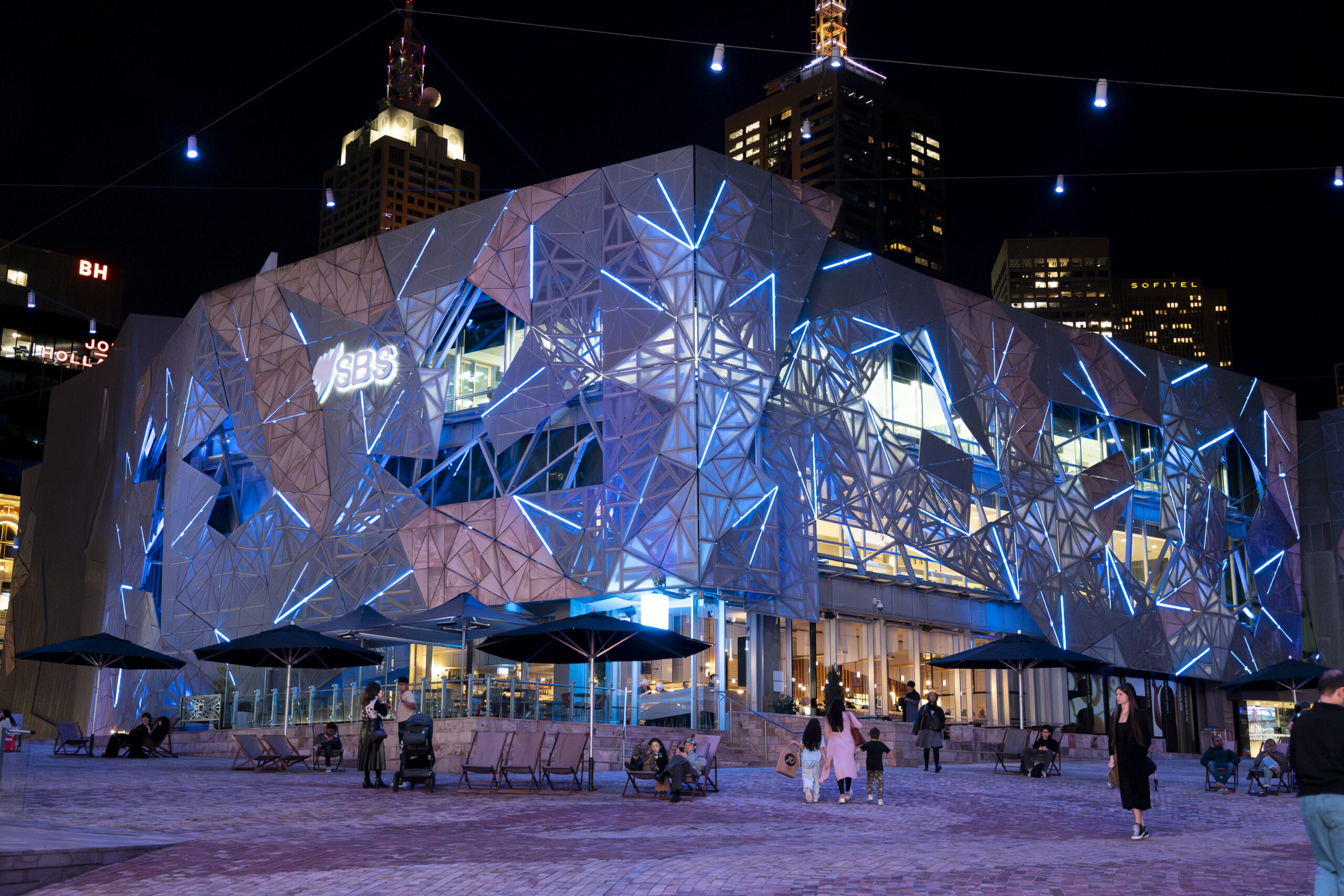
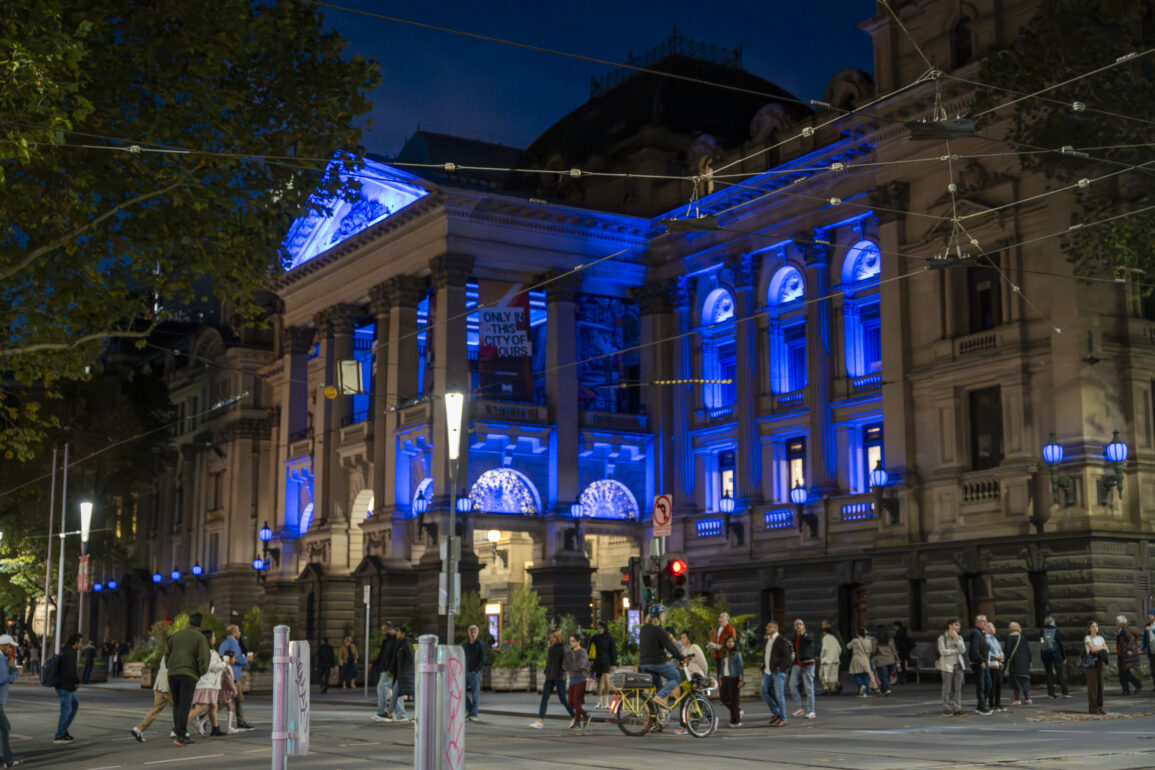
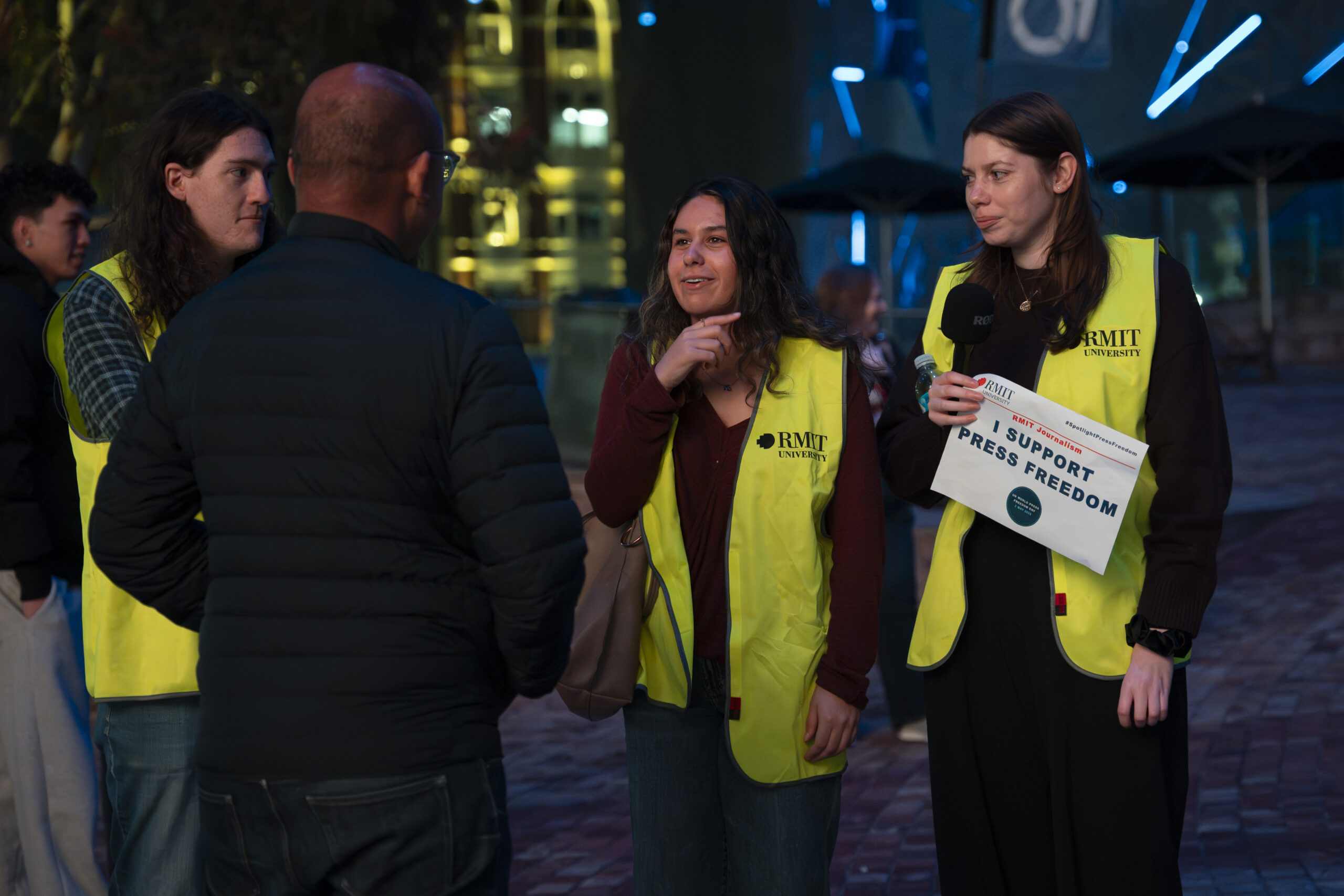
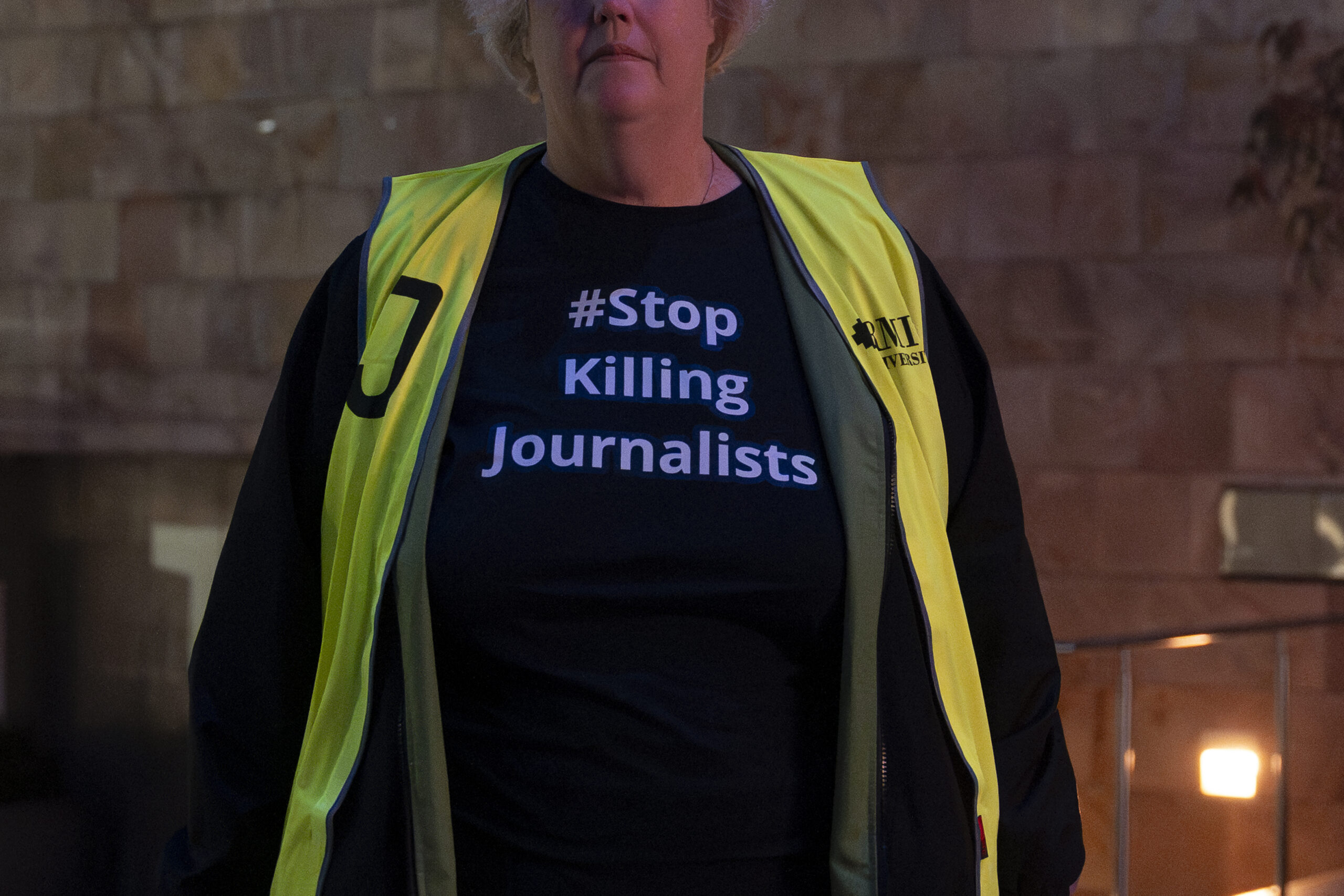
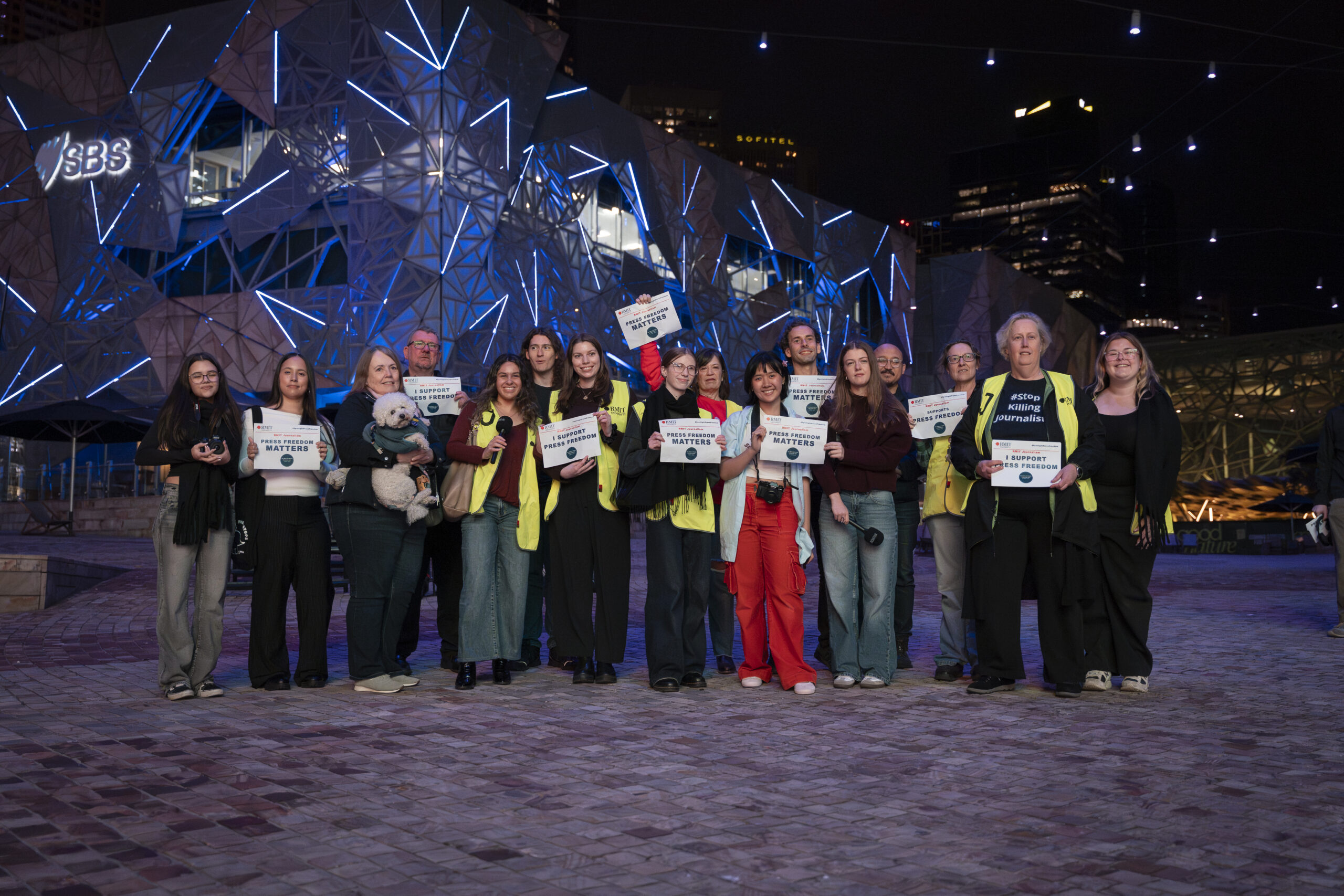
On the evening of May 3rd, Melbourne’s Federation Square and Town Hall lit up blue. It wasn’t a sports celebration or a light show; it was a reminder. A reminder that across the world, the right to report the truth freely is not a given. For UN World Press Freedom Day, the global #SpotlightPressFreedom campaign, led by advocacy group Ink-Stained Wretched and brought local by RMIT’s Journalism Program, gathered journalists, educators, students and freedom advocates together under those blue lights to ask a question we don’t ask near enough: What happens when press isn’t free?
The numbers behind that question are stark. According to the committee to protect journalists, 2025 was the deadliest year for the press in more than three decades. 129 Journalists and media workers were killed, a record high. At the same time, 335 journalists are currently imprisoned in connection with their work, and a further 89 remain missing. These aren’t mere statistics. They are colleagues, sources, storytellers; people doing the same job that reporters here in Melbourne were doing that night at Federation Square and Town Hall.
What is Freedom of the Press?
At its core, press freedom is the right of journalists to report, investigate and publish information without interference or fear of punishment. It underpins democracy – without it, governments and institutions can operate without scrutiny, and the public is left in the dark. When journalists are silenced or suppressed, truth is the first casualty.
But for some, that principle is anything but abstract.
Detained for Doing His Job
Ye Myo Khant knows the cost of press freedom better than most. A freelance photojournalist from Myanmar, Ye Myo Khant was arrested by the military in 2021 while covering anti-coup protests and was detained for more than 120 days.
“I especially remember World Press Freedom Day in 2021 because I was in prison at that time,” he said. “While people around the world were talking about press freedom, I was detained for doing my work as a photojournalist.”
The experience, he says, changed his life completely; but it didn’t change his conviction. “Even after what happened, I still believe documenting the truth matters.” He believes “Journalists should be able to report facts and document events without fear of arrest, violence or threats.”
Now based in Australia, Ye Myo Khant is a reminder that press freedom isn’t a distant issue. It’s personal, political, and it has consequences that follow people for life.
“I hope people continue supporting independent journalism and standing up for the right to tell the truth.”
— Ye Myo Khant
Why It Matters Closer to Home
You might think the press freedom crackdowns only happen in other countries. Gem, a 4th year Fine Arts student and RMIT and campus activist, would push back on that. Earlier this year, Gem faced a potential suspension from RMIT after posting on Instagram about the university’s ties to weapons companies. Rather than stay quiet, they went to the media.
“The role that the media played was significant in terms of publicly exposing the university,” Gem said. “It showed a level of hypocrisy between the ideal the university tries to put out about itself, being progressive and for free speech, and this contradictory reality.”
The suspension was ultimately dropped. Gem credits a combination of media coverage and community pressure; over 500 members of the RMIT community signed an open letter in her support. It’s a case study in why a free press matters: institutions are less likely to overstep when they know someone is watching and willing to report it.
Gem is also conscious of the bigger picture. She points to the banning of the phrase “from the river to the sea” in Queensland, the cancellation of an activist meeting in Sydney over Pro-Palestinian slogans, and the treatment of author Randa Abdel-Fattah at the Adelaide Writers’ Festival as examples of a worrying pattern – one where the language of “safety” is used to shut down political expression.
“Freedom of speech and freedom of press is an essential issue for any so-called democracy,” Gem stated. “When there are attacks on it, it’s our responsibility to not be cowed; to stand up and fight for those rights. Because if we don’t fight, they will just get away with it.”
Why Press Freedom is Everyone’s Issue
It’s easy to think press freedom is someone else’s fight; a journalist’s concern, a government problem, or something that just happens overseas. But both Gem and Ye Myo Khant make the same point from very different vantage points: when the press isn’t free, everyone loses.
“Without press freedom, the truth can be hidden,” Ye Myo Khant said simply. “More awareness is needed because press freedom affects everyone, not only journalists. When press freedom is limited, society loses access to information and different perspectives.”
For university students especially, that’s worth sitting with. The media shapes what we know, what we discuss and what we question. Gem points out that no news is truly neutral – every outlet carries some form of bias, and that means reading critically matters as much as reading widely.
How You Can Help
You don’t need to be a journalist to support press freedom. Supporting independent media, reading across multiple sources, calling out censorship when you see it, and showing up – like those who gathered under the blue lights of Federation Square – are all places to start.
As Ye Myo Khant put it: “Press freedom is not something people should take for granted.” He knows that better than most. The question is whether the rest of us are willing to act like we do too.