By: Ella Frydman
After attending Audrey Hobert’s Staircase to Stardom tour on the 19th of May, I felt inspired. At first, I didn’t know what for— just an uplifting wave of liberation.
I can only describe the experience as pure magic. Set below the starry-filled sky of the Forum in a crowd of just 2000, it still felt intimate. Her personality shone through each performance, constantly dancing, spinning and jumping around. The crowd carried the same energy— singing, dancing and crying along with her.
I decided to take this intense surge of inspiration and use it to look back on her debut album, and how she came to be the star she is growing into.
To the naked eye, 26 year old Audrey Hobert might seem like your typical nepo baby, amplified. Her dad is Bill Hobert, writer and producer for Scrubs and The Middle. Her brother is fellow singer/songwriter and musician Malcolm Todd, and her best friend is rising pop star Gracie Abrams (who has her own slew of nepo baby allegations).
With all this in mind and the way that negativity tends to circulate online, I will admit that I was sceptical of her work at first. What I have come to learn, however, is that there is much more to Hobert than meets the eye.
She proves this in the first track of her debut album Who’s The Clown, titled, I Like to Touch People. This initially confronting opening is actually a witty double entendre, offering an insight into why she wrote the album. In her personal, diy-2000s-esque archive website, concealed in a pink leather-bound diary titled “Read Me!” she explains, “I like to touch people felt like the best opener I could have for my album… The idea that one of my songs resonates so deeply with somebody that they feel okay to be in their skin and free to be themselves.” What starts as a potentially off-putting introduction turns into a charming confession atop a sing-songy, almost child-like melody, touching on relatable issues like, “‘Cause I grew up with a people-pleasing mother / So now I have problems.”
This theme of relatability flows throughout the entirety of the tracklist, usually accompanied by a catchy beat that won’t leave your head (in the best way). Even the fictional songs have themes that resonate, such as Bowling Alley— a song you may know from its viral dance on TikTok. In the words of Hobert herself “Bowling Alley is my legit song I’m most proud of”—another anecdote taken from her archive website, a personal insight into the quirky workings of her mind. Beneath the playful tunes and imagery lies a message about learning to find comfort in your own company, amidst the perceived judgment of others. It centres around the idea of being the “naked neighbour”, tossing up the pros and cons of going to a bowling alley party by yourself or staying home.
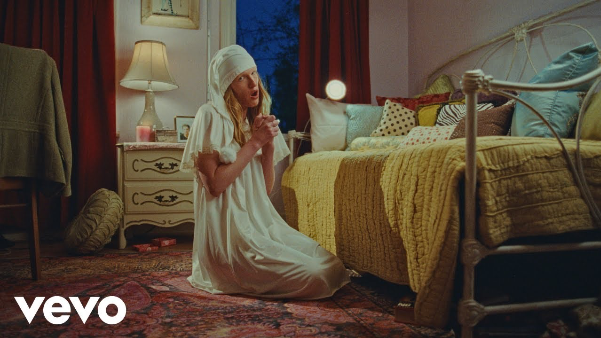
Audrey Hobert: Bowling Alley – video
On internet personality Jake Shane’s podcast Therapuss, she gives credit to Abrams for helping inspire and foster her talent, “it was her who was like, hey, you know, you’re good at this. Like let me set you up with it.” As a long-time fan of Abrams myself, I have witnessed Hobert’s impact on her work, from her creative direction in music videos such as I Love You, I’mSorry, and the composition of hit song That’s so True.
The breathless, run-on style of writing found in the bridges of those two songs is unmistakably clear in the lyrics of Hobert’s Who’s The Clown. In the post-chorus of Shooting Star, the lyrics are sung in a tongue-twisting yet catchy mouthful, “he treats me like shit, but I promise you, baby, it’s worth it / ‘Cause it hurts me.” The steady drumbeat keeps it grounded through the intricate lyricism, dropping off at just the right times. It comes across as a stream of consciousness, reflecting the chaotic inner workings of many of our minds— it’srefreshing to hear it sung back in the form of a fun, synth-pop song.
Nonetheless, the brutal and blunt honesty in each track can sometimes act as a double-edged sword. In Chateau, she sings about the hardships of feeling out of place at a Chateau, surrounded by “the whole A-list (sorry, God forbid) / Can’t lie, but I’m thinkin’ like, high school was better than this.” To most, this complaint may feel a tad out of touch with reality, no matter how honest. However, the building guitar and vocal riffs were just enough to rescue the song from itself. Like many parts of the album, it may take a couple of listens to adjust— but the outcome is richly rewarding.
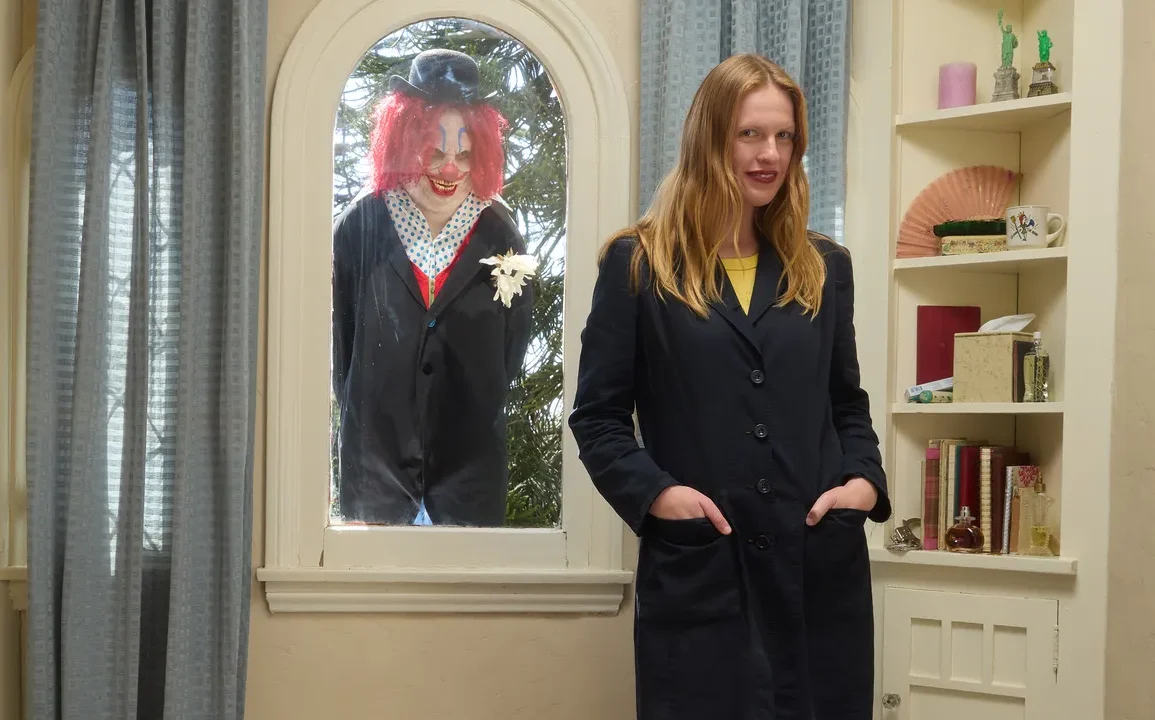
In line with this theme of disconcerting first impressions, the overall narrative of the album circles back to the title, Who’s the Clown. In an interview with People, Hobert revealed she wanted to “scare” people with the album art, featuring a menacing clown peering through the window at her. “Just knowing that I was a new artist. . . I would have to capture people’s attention . . . I thought that [the clown imagery] would be funny because the album itself is full of upbeat songs,” she explained. The deeper meaning behind each “upbeat” song is what elevates Who’s the Clown beyond surface-level pop; upon each listen, a new meaning can be unravelled. Much like a clown, Hobert dresses the vulnerability of each song in a layer of fun and whimsy; it’s as enjoyable as it is emotionally stimulating.
While it is undeniable that Hobert may not have found success this easily without the many stepping stones already laid out for her through nepotism, it would be wrong to say she is not deserving. Her strong debut, both in production and performance, has marked her as an artist of her own right, and I am excited to see what the future holds for her.