By: Dilan Bektas
Almost a decade after his passing, Playboy magazine and its founder Hugh Hefner, remains a point of discussion and holds strong presence within the collective consciousness. Long before the rise of “Alpha Males” on social media, there was Playboy Hugh Hefner, who became fuelled by his romantic grievances at a time when sexual liberation was on the horizon.
The rules of abstinence of his puritanical upbringing made sense for a while, leading him to wait until marriage till the age of 22. He once lived a Quiet life in the shadows as an unassumingly charming cartoonist from Chicago, in the economically prosperous 50s. While his mother had visions of her son becoming a missionary and spreading the gospel word, young Hefner would enrol in college to study psychology. Shaped by a Childhood where laughter and affection were banned in his household, the 6Os would bring new horizons to American life.
Hefner’s understanding of the world would radically shift after his college sweetheart’s confession of infidelity, the night before their wedding. This emotionally catastrophic event would lead him to abandon his old life and create the scandalous “Playboy” magazine, which marked a new era for him, with the rest of the world. Hef’s newfound playboy persona and lifestyle was aligned with the rise of the sexual revolution of the time, magnifying his public image and position of power in the print business. Although, he would go onto having a daughter with his first wife, his focus and time would be solely devoted to the magazine.
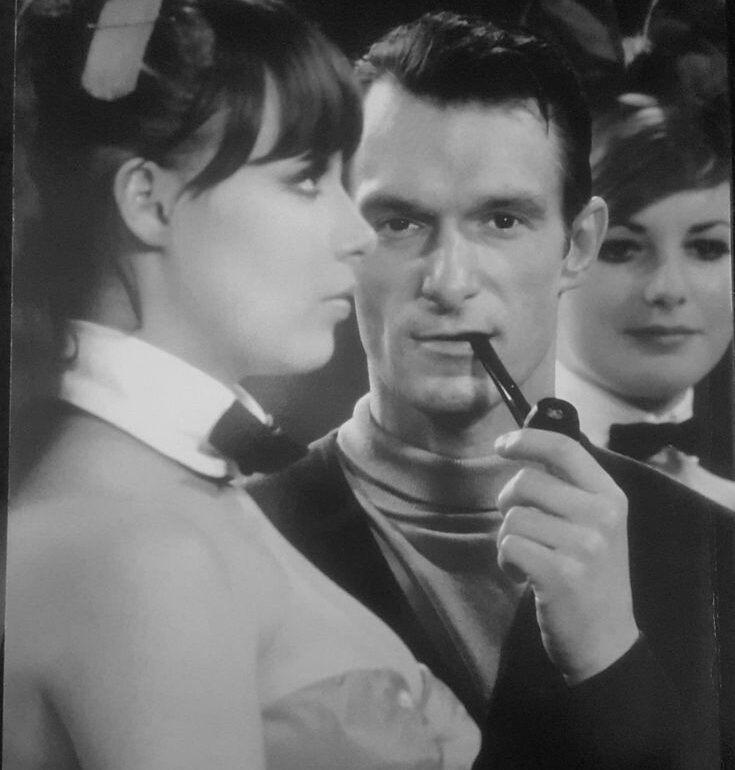
He understood sex sold and chose to capitalise off what he once perceived to be sacred. While the provocative images were what drew predominately male readers in, the writing was what they stayed for. Sooner enough, sex became everything in American Society but for the original Playboy, sex was solely about power. Often confronted by feminists of the time, the bunny costume of the playmates became a main area of frustration. After all, when women fought for their rights to bodily autonomy, being dressed in bunny costumes wasn’t quite what they had pictured. Depending on who you ask, Playboy either influenced the times or simply reflected it back.
Ultimately, Hefner’s strategic blending of high art imagery with immaculate writing, made him successful in normalising the objectification of women in the media, which would have a lasting impact on society beyond his lifetime. In the age of technology, we see the playboy archetype exist online, with popular figures such as Clavicular embodying the morally ambiguous lifestyle involving partying, drinking and plenty of women at their disposal.