By August Carey
Content Warning: This review will cover themes of religious trauma and homophobia
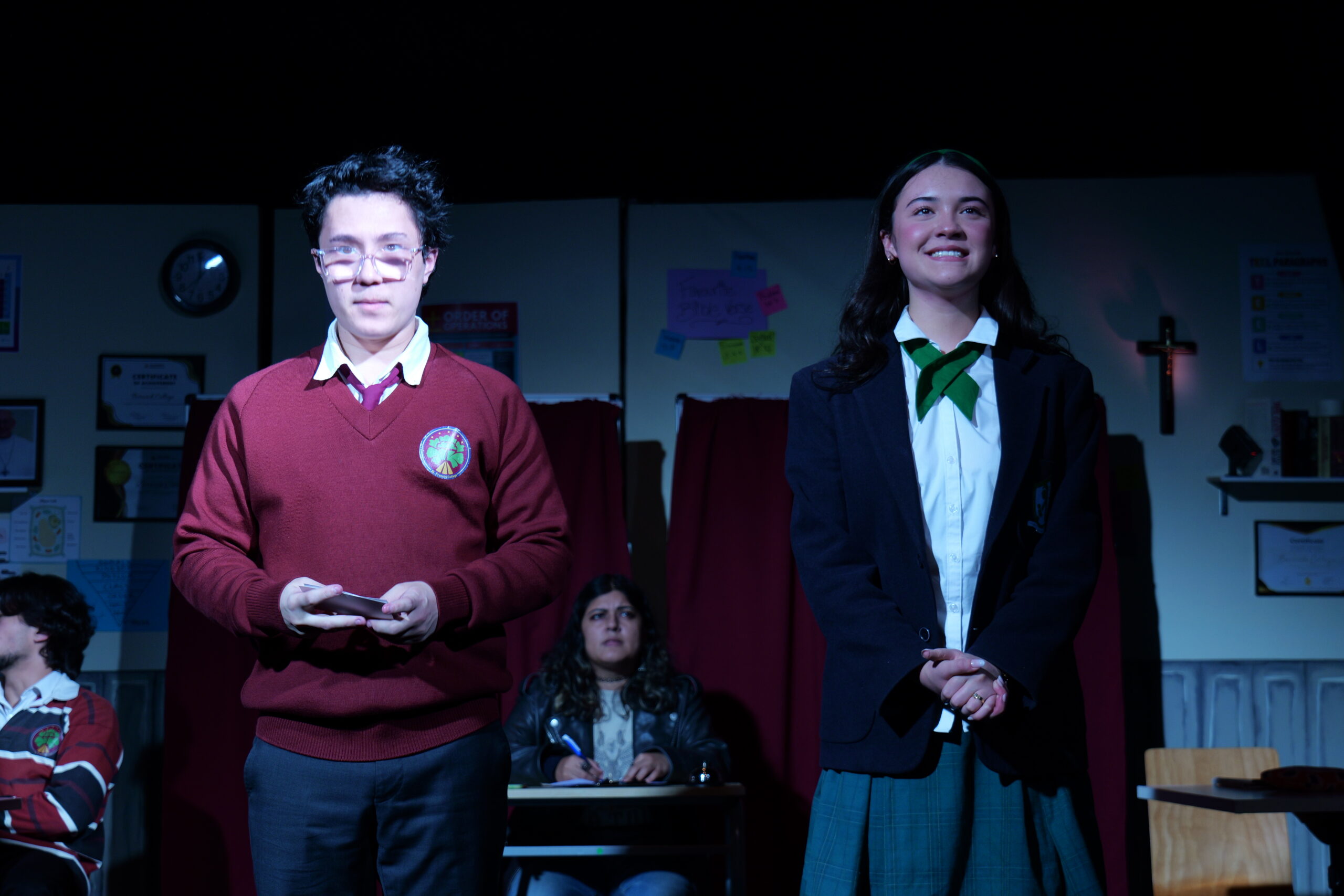
RMIT RedActs’ original play, ‘This House Believes’, written by Charlotte Fels, is a time machine to the good old days of high school debate. It follows two debating teams from single-sex schools as they attempt to debate whether same-sex marriage should be legalised. I sat in a full house at the Kaleide Theatre on closing night, where the crowd seemed split evenly between friends and family of the cast and crew, and regular attendees like myself; the air was electric nonetheless.
‘This House Believes’ is set in 2016, a year before the postal survey that paved the way for marriage equality, creating tension between the characters and their own morals from the moment the lights go up.
The characters are immediately established by a small but mightily talented cast. An almost caricatural representation of private-school boys takes the stage, unable to refrain from play-fighting for more than ten minutes, while their opponents – the Catholic Schools’ Girls team – are frenetic in their need to win this debate despite the odds stacked against them. It’s a frighteningly accurate look into the inner machinations of high school debating which, coupled with the evocative ‘private school’ set designed by Jemima Fincke, gave me flashbacks to my own experiences with the extracurricular.
The play switches between each team’s perspective as they prepare their arguments, while the characters are forced to confront their own opinions on same-sex marriage.
On the girls’ team, Maggie (Emma Boyce) shocks her teammates as she parrots her mother’s homophobic views, sparking friction with the volatile, outspoken Lilith (Zoe Boussioutas). Chronic overachiever Ruth (Karina Howard) is forced to mediate frantically while preparing her speech, grounding the play as preparation time ticks down. The performances are believable and raw (crying on command is always particularly impressive to me), and the reveal that Maggie and Lilith are entangled in a biblically repressed situationship only heightens the play’s tension.
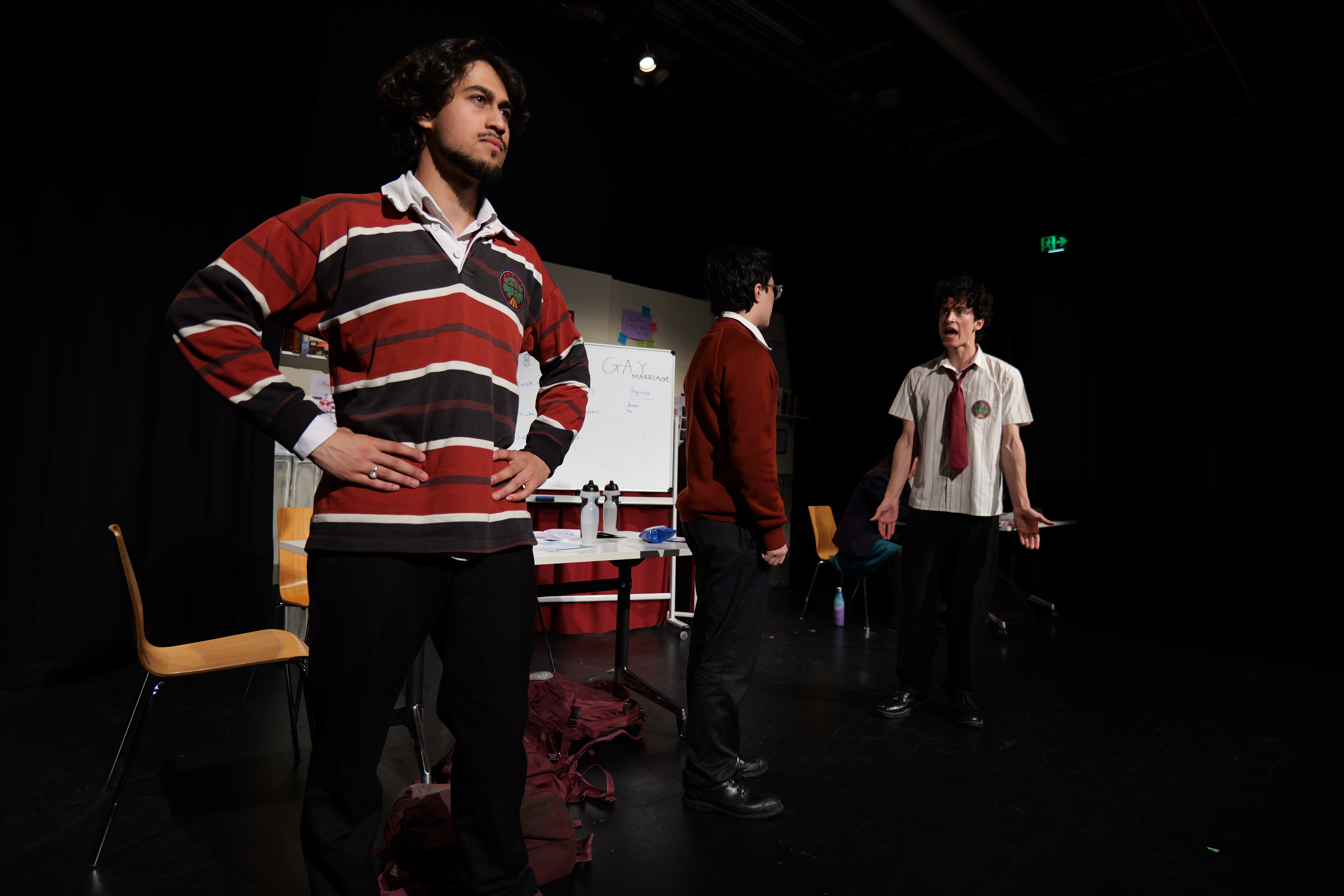
On the boys’ side, the audience is treated to Charlotte Fels’s comedy writing. Aryan Joshi, playing Mark, grabs the audience and doesn’t let go with his characterisation of the well-intentioned class clown. Alongside golden boy Luke (Benjamin de Gabriele) and supportive teammate John (Bodhi Keech), he confronts his own ignorance and assumptions, culminating in a touching coming-out moment for Luke. While these characters’ perceptions of homosexuality and queerness are in many instances frustratingly ignorant, they come across as a broader societal failing within the play’s context rather than as hatred.
The show’s third act is the debate itself (did you forget where all this was headed?), which derails spectacularly. Opening with Mark’s speech on how hot gay babies would be, it takes a truly gut-wrenching left turn into a monologue by Maggie, who grapples between her feelings for Lilith and her faith in a plea addressed to God. Boyce dazzles with this performance; I’m not sure I breathed once. As the formal structure of the debate dissolves following similarly heartbreaking speeches from both Luke and Lilith, the teams’ third speakers perform an impressive overlapping dialogue. Keech and Howard are almost scarily in sync here, and the timing is well paced.
I cannot fail to mention the utter power of the lighting in this show. While at times it is a bit on the nose – turning pink when there is romantic tension – there are some truly extraordinary moments. Lighting designer James Pringle really shines during Maggie’s monologue, spotlighting both her and the cross on the set wall. The subtext is clear, but the result is heartbreaking.
While I have already discussed my own debating-related traumas in relation to Jemima Fincke’s accurate set design, I haven’t properly given her flowers for the props. She must have been a debate kid herself; she truly thought of everything, from newspapers to guide speechwriting to cue cards for said speeches.
The costuming, designed by Naura Angelica, is wholly believable; the school uniforms are tailored enough to each character’s personality while remaining cohesive across each of the teams.
As the debate concludes, our final character emerges: the adjudicator (Radhika Chhabra), the voice of wisdom. Free from the restrictive thinking of high school, she shares the retrospective that ‘high school sucks’ with the impressionable young debaters. The play ultimately ends with her advice to Lilith to ‘have faith in the future.’
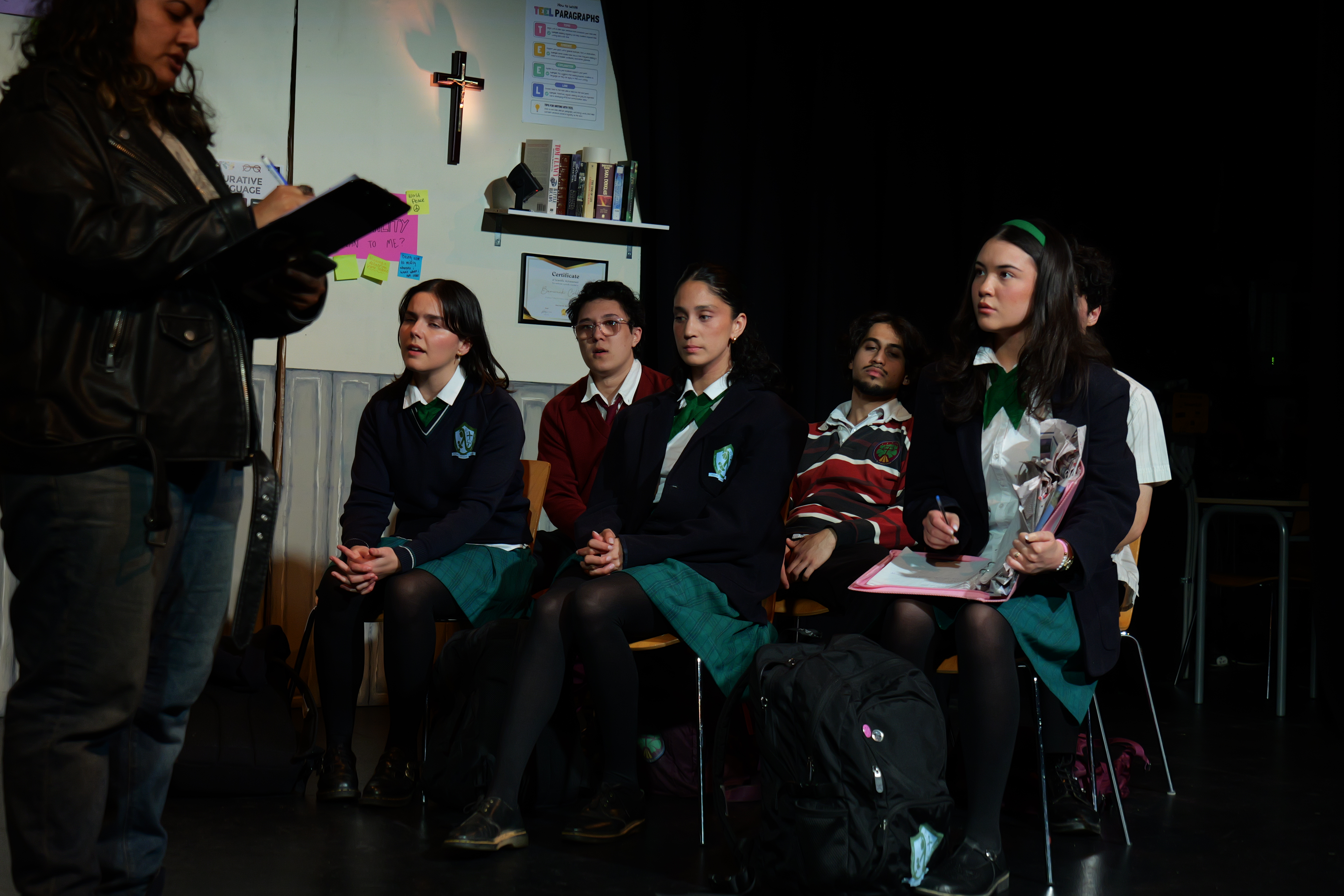
In all, RedActs’ ‘This House Believes’ is a hopeful play. It tackles the difficult interplay between religion and sexuality against a coming-of-age backdrop. I truly look forward to playwright Charlotte Fels’s next ventures.