
By: Huda Shehzad
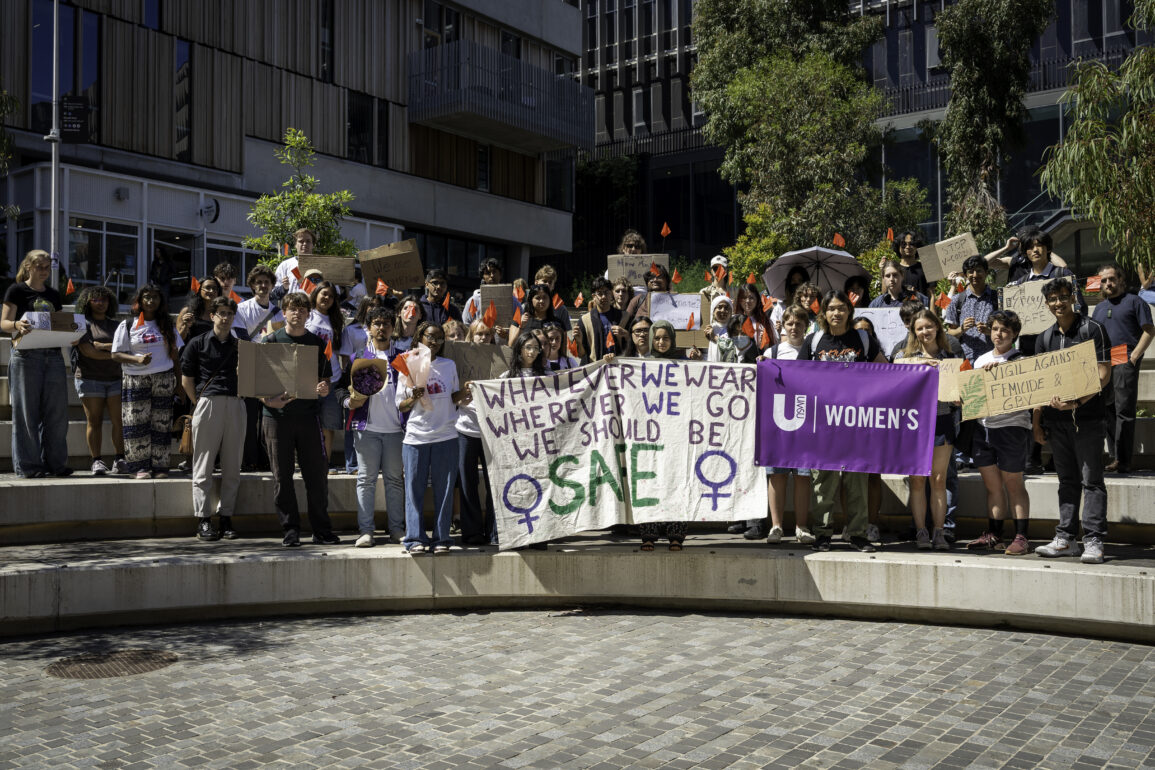
Students from both RMIT University and the University of Melbourne gathered at the Parkville campus on Wednesday 21 October to remember women killed by gendered violence and to call for safer campuses.
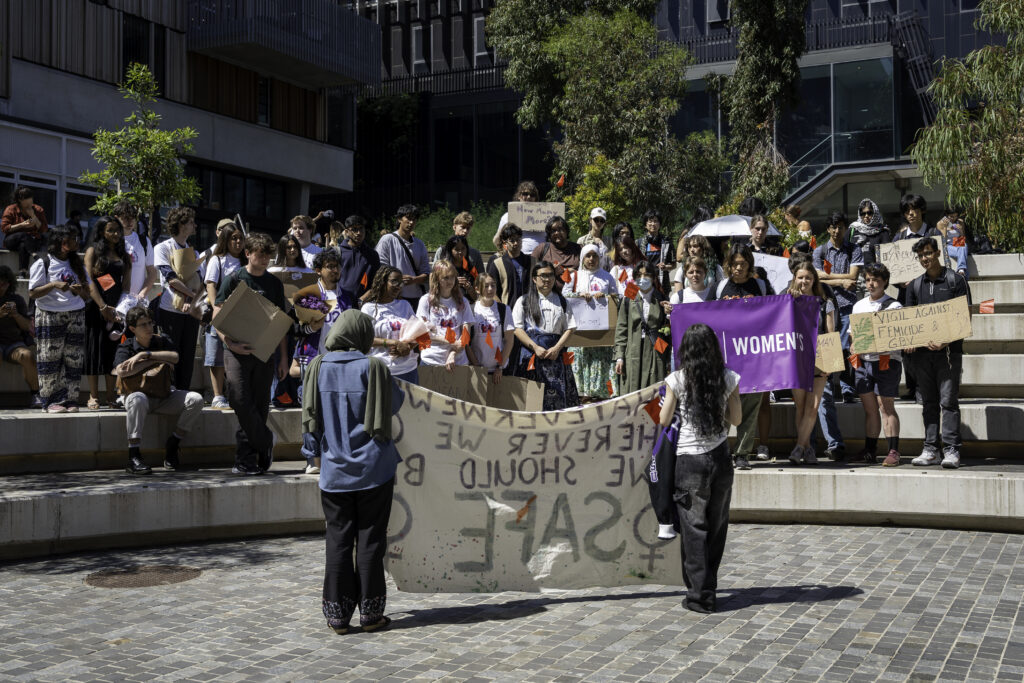
Approximately 50 attendees met at the Amphitheatre and walked across campus, then observed a minute of silence before laying flowers and signs at a makeshift shrine just outside Building 168.
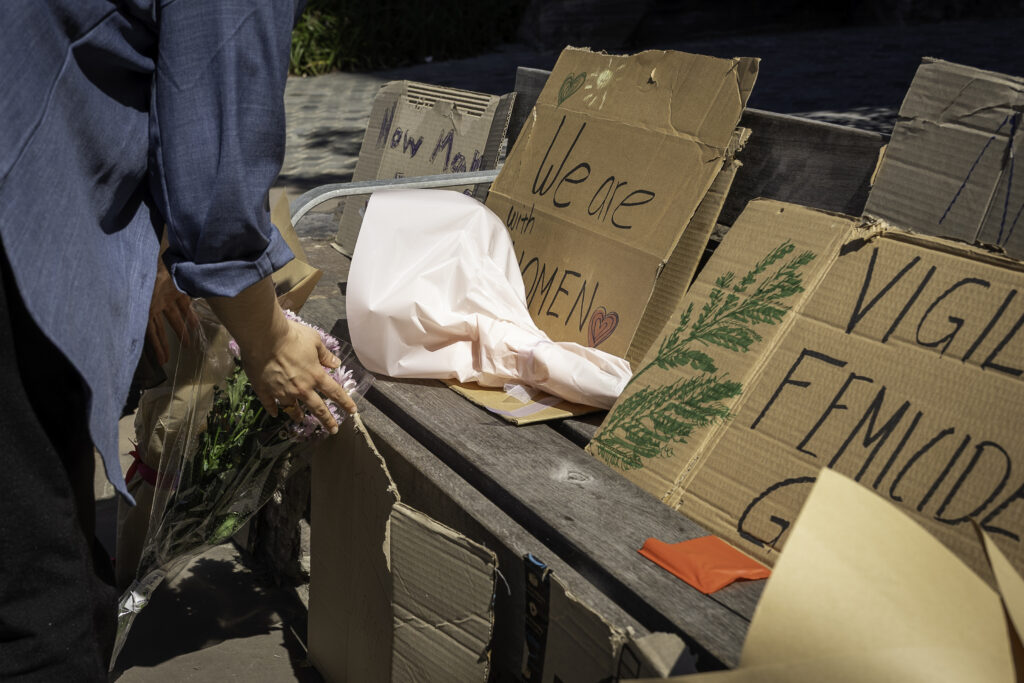
The vigil, hosted by RMIT University Student Union (RUSU) and University of Melbourne Student Union (UMSU), was part of the National Campus Vigil against Femicide and Gender Based Violence, created by the National Union of Students (NUS) Women’s Office.
NUS Women’s Officer Husan Ara says the nationwide vigil was created to “educate about the issue and represent the lives that have been lost.”
So far in 2026, the Red Heart Movement reported 56 women and 27 children killed as a result of murder, manslaughter or neglect.
UMSU Women’s Officer Eya Takrouni, RUSU Women’s Officer Angela Fenech, and UMSU President Lushy Chinganya were among speakers at the event.
Fenech wants students to feel inspired to “not only stand up for women” but to speak up for them in “times of danger and oppression.”
“The only way we can move forward is through highlighting the significance of allyship and how the patriarchy can affect anybody, regardless of gender,” says Fenech.
Chinganya says she took part because standing up for women was “more crucial than ever before.”
She pointed to recent incidents in sport, at universities overseas and at the University of Melbourne itself, saying an unsafe environment for women “shouldn’t be normalised.”
Campus safety at the University of Melbourne has been under scrutiny since June, when biomedical student Bao Phuc Cao was placed on the Victorian Sex Offenders Register following multiple legal cases for non-consensual secret filming of women in intimate spaces.
In October, UMSU passed a motion to expel him from the union. He will no longer be able to join UMSU clubs or societies, be eligible for UMSU student discounts, and is barred from buildings administered by the Student Union.
One UniMelb student, who asked not to be named due to safety concerns, says the union’s decision felt “like one step in a longer fight rather than a conclusion.”

Chinganya says the vigil was not a one-day event. “It is now up to us and the university to take on real responsibility for keeping women safe at uni and safe at home.”
Although only nine campuses could take part this time, Ara stated she will push to make the vigil NUS policy at the National Conference in December.
Fenech suggests people can get involved by “continuously participating in conversation dedicated to misogyny,” and that solidarity “starts with the confidence to speak up.”
“I hope that all survivors trust that we’ll support them and we will show up and fight for their experiences to be taken seriously and heard, every day,” Chinganya says.
If you or someone you know is affected by sexual assault, family or domestic violence, call 1800RESPECT on 1800 737 732 or the Lifeline crisis line on 13 11 14.
RMIT students can contact RMIT’s Safer Community and Counselling services, and University of Melbourne students can contact the university’s Safer Community Program and Counselling and Psychological Services.